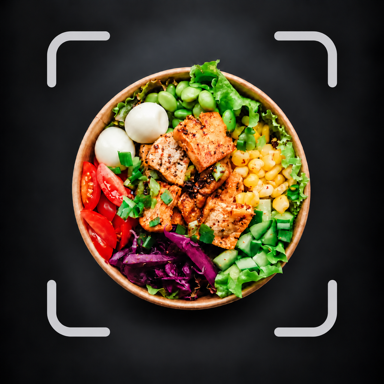
Why use a photo at all?
The hardest part of tracking food is not the maths; it is keeping the habit going. Weighing every ingredient and searching a database for each item takes time, and most people stop after a few days. Taking a photo takes seconds, which makes it far more likely you will log the meal at all. A reasonable estimate that you actually record is usually more useful than a perfect one you skip.
How photo estimates work
Whether a person or a piece of software is looking at your plate, estimating calories from a photo comes down to the same three steps:
- Identify the foods. Rice, grilled chicken, broccoli, a creamy sauce. Mixed dishes like curries or stews are harder because ingredients are hidden.
- Estimate the amounts. How big is the portion compared with the plate, the cutlery or a hand? This is where most of the uncertainty lives.
- Apply typical nutrition values. Once the food and amount are known, standard reference values for that food give calories, protein, carbs, fat and other nutrients.
Every estimate carries some error. Even trained dietitians estimating from photos get a range rather than an exact number. The goal is a figure that is close enough to guide your choices and to show trends over days and weeks.
How to take a photo that gives a better estimate
Get the whole plate in frame
Shoot from slightly above, around a 45-degree angle, so both the surface and the height of the food are visible. A straight top-down shot hides how tall a pile of pasta is; a side-on shot hides what is underneath.
Include something for scale
A fork, a standard plate or your hand next to the food gives a sense of size. A small bowl filled to the brim and a large bowl half full can look identical in a tight close-up.
Use good light
Daylight or a bright room makes it easier to tell grilled from fried, brown rice from white, and a thin dressing from a thick one. Avoid heavy shadows and strong colour filters.
Show the extras
Sauces, dressings, butter, cheese and drinks are often where a meal's calories hide. If the dressing is in a pot on the side, include it in the shot. If you added oil while cooking, note it.
Separate when you can
Foods spread out on a plate are easier to identify than foods stacked on top of each other. You do not need to rearrange your dinner, but a burrito bowl photographed before mixing is easier to read than after.
What a camera cannot see
Being honest about the limits will help you use photo estimates well:
- Cooking fat. Vegetables roasted in a tablespoon of oil look much the same as vegetables roasted in a teaspoon, yet one has about 80 more calories.
- Hidden ingredients. Sugar in a sauce, cream in a soup, or cheese inside a sandwich may not show up.
- Density. A scoop of mashed potato made with butter and milk weighs more, and carries more energy, than it appears.
- Drinks. A glass of juice and a glass of water can look alike in some light.
The fix is simple: add a short note. "Fried in butter", "full-fat yoghurt", or "about two tablespoons of dressing" closes most of the gap.
When to weigh, scan or type instead
A photo is ideal for home-cooked plates and restaurant meals. For packaged foods, the label is more accurate, so scanning a barcode or the nutrition panel is the better choice. If you eat the same breakfast every day, weighing it once and saving it gives you a reliable entry to reuse. And for something simple like "a banana" or "a flat white with oat milk", typing it is often quickest. Our guide to reading a nutrition label explains what to look for on a pack.
Use trends, not single meals
Estimates for individual meals will sometimes be a little high and sometimes a little low. Over a week those errors tend to balance out, and the overall pattern becomes clear: whether you are generally hitting your protein goal, how much your weekends differ from weekdays, or which meals leave you hungry. That pattern is what helps you make changes that stick. If you are aiming for a specific target, our guide to calorie deficits explains how to use those trends sensibly.
Frequently asked questions
How accurate are calorie estimates from photos?
They give a useful estimate, not an exact figure. Accuracy is best for simple, clearly visible foods and lower for mixed dishes, hidden oils and sauces. Adding a short note about cooking fat or dressings improves the estimate.
What angle is best for a food photo?
About 45 degrees from above usually works best, because it shows both the surface of the food and how high it is piled. Keep the whole plate in frame and include a fork or hand for scale.
Should I photograph packaged food or scan the label?
Scan the barcode or the nutrition label when you can. The manufacturer's label is usually more accurate for packaged foods than a visual estimate.